
When planning travel — be it a short city break, a multi-country tour, or a business trip — one of the most common questions is how to stay connected affordably. Two popular options are choosing a travel eSIM like RORO eSIM or buying a local SIM card at your destination. Each has its own cost structure, advantages, and tradeoffs, but which one actually saves you more money? Let’s break it down.
Direct Cost Comparison
Local SIM Cards
Local SIM cards purchased in-country often appear cheaper on a pure data-per-gigabyte basis — especially if you’re staying in one place for a while. In many Asian and European countries, local carriers sell prepaid SIMs with generous data allowances for modest amounts (e.g., 10–30 GB for $10–$30).
Pros of Local SIMs:
Often lower cost per GB.
Typically include voice/SMS options with data.
Can be very affordable if you’re staying in one location and don’t mind setup.
Cons of Local SIMs:
You must physically buy the SIM, often at an airport kiosk or local store, which might require passport registration.
Setup time and language barriers can add hidden costs in time and hassle.
For multi-country trips, you often need to buy a new SIM for each border crossing, and lost credit or unused data can add to the overall expense.
RORO eSIM Plans
Travel eSIMs like RORO eSIM are digital data plans you purchase and install online before departure. RORO offers flexible plans for single countries, regions (Asia, Europe, etc.), and global coverage — with data starting at modest prices and no roaming fees.
Pros of RORO eSIM:
You can buy and install the plan before you travel, so you have connectivity the moment you land.
No physical SIM card means no time spent in lines or worrying about losing cards.
Keeps your primary phone number active for texts and calls while using RORO’s eSIM for data.
Competitive pricing with both fixed data and unlimited-style options in Asia, Europe, and beyond.
Works in 200+ countries, so you can use one plan across borders, saving the cost of multiple local SIMs.
Cons of RORO eSIM:
Per-gigabyte price may be higher than a local SIM in some countries when compared strictly on raw data.
Not all plans include voice or SMS (mostly data-focused), though many travelers rely on VoIP apps instead.
Real-World Cost Scenarios
Short Trip (3–7 Days)
For a brief getaway, RORO eSIM often comes out ahead when factoring time, convenience, and cost. A small data plan (e.g., 3–5 GB) from RORO may cost $10–$20 and gives immediate access upon landing — without having to hunt for a local SIM vendor.
If you instead opt for a local SIM, you might spend less on pure data but lose time and convenience, especially at busy airports. Plus, if you’re going to multiple stops, you may need more than one SIM purchase.
Multi-Country Trips
Here’s where eSIM providers like RORO really shine. Instead of buying separate SIM cards in France, Germany, Spain, and Italy, you can get a regional Europe eSIM that works across all destinations — often cheaper and far simpler than buying four local SIM cards (one per country).
Local SIMs may still be cheaper per GB, but the cumulative cost after buying new SIMs per border crossing often exceeds a regional eSIM plan.
Business Travel
For short business trips, RORO eSIM is often the best value. You pay a predictable rate for the data you need, install before departure, and don’t waste precious travel time on SIM setups. Convenience and predictability can outweigh slight price differences, especially when time is money.
Other Cost Considerations
Hidden Time Costs
Even if a local SIM card costs $5–$10 less upfront, don’t ignore the time cost: finding a reputable vendor, waiting in lines, and potential language barriers — these are real costs in both vacation leisure and business productivity.
Dual SIM Benefits
With a travel eSIM like RORO, you can leave your home SIM active for calls or texts (or 2FA access) while using the eSIM for data — something local SIM cards don’t allow unless your phone supports two SIMs.
Unused Data Waste
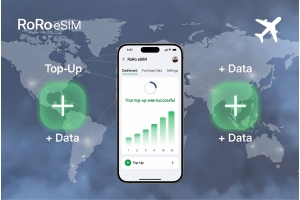
Local SIM plans often expire with leftover credit — you can’t transfer unused data to future trips. With eSIMs, you can top up or purchase new plans digitally as needed, often with more transparency.